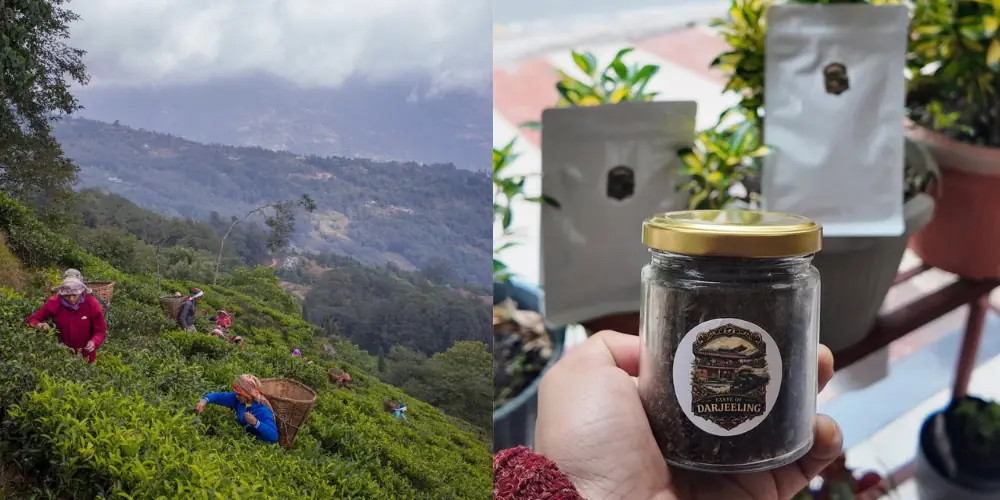
Darjeeling tea holds a rare place in the world of beverages, often described as the “Champagne of Teas” for its refined character and distinct identity. Each cup carries a profile that feels different from standard blends found on store shelves.
The uniqueness comes from a tight combination of geography, history, climate behavior, and careful cultivation practices that cannot be replicated elsewhere. Its global reputation has been built slowly, shaped by centuries of cultivation in a very specific corner of India and a legacy that still defines premium tea culture today.
The tea gardens of Darjeeling sit in the Indian state of West Bengal, at elevations ranging between 3,000 and 7,000 feet above sea level. This altitude creates a cool climate where tea plants grow at a slower pace compared to lowland regions. That slower growth plays a key role in flavor concentration.
Soil in this region carries rich minerals, while shifting sunlight, misty air, and cool nights create constant variation in growing conditions. Instead of rapid expansion, the leaves develop layered taste notes over time.
This environment supports tea bushes that respond uniquely to seasonal changes, producing a profile that tea drinkers instantly recognize.
A Tea Legacy Born in Colonial India
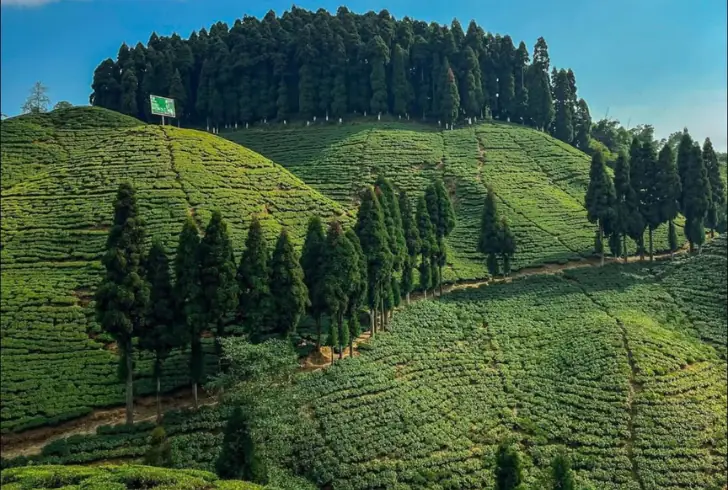
The origins of Darjeeling tea trace back to the 19th century during British rule, when efforts began to reduce dependence on Chinese tea imports. Large-scale plantations were introduced across the region, setting the foundation for what would become a globally recognized tea category.
One landmark in this journey is the Makaibari Tea Estate, established in 1852. The estate introduced its tea factory in 1859, recognized as the first in Darjeeling. Built using wood, bamboo, and cast iron, it stands out for its early structure and long-standing legacy.
By 1866, the region recorded 39 tea gardens producing around 21,000 kilograms of tea. Growth accelerated quickly, and by 1870, Darjeeling expanded to 56 estates producing over 71,000 kilograms. Estates such as Castleton and Margaret’s Hope joined Makaibari in shaping global recognition for the region’s tea.
During the 1920s, demand surged across Europe and the United States, pushing Darjeeling tea into the luxury segment of global trade.
Muscatel Character and Global Protection
One defining trait separates Darjeeling tea from all other varieties: muscatel flavor. This profile carries a grape-like aroma with a gentle sweetness and depth that develops only under the specific soil and climate conditions of the region. No other tea-growing area has been able to reproduce this exact character.
Because of rising international demand, mislabeling became a serious concern. Annual genuine production remains around 8–9 million kg, yet historically more than 40 million kg has been sold globally under the Darjeeling name. This gap reflects widespread counterfeit labeling.
To address this, Darjeeling tea received India’s first Geographical Indication (GI) tag on 27 October 2003. Only tea grown in the designated Darjeeling region and meeting strict standards can carry this name. Later, Darjeeling Green tea and Darjeeling White tea also received GI recognition in 2019.
Hand-Plucked Craft and Limited Production
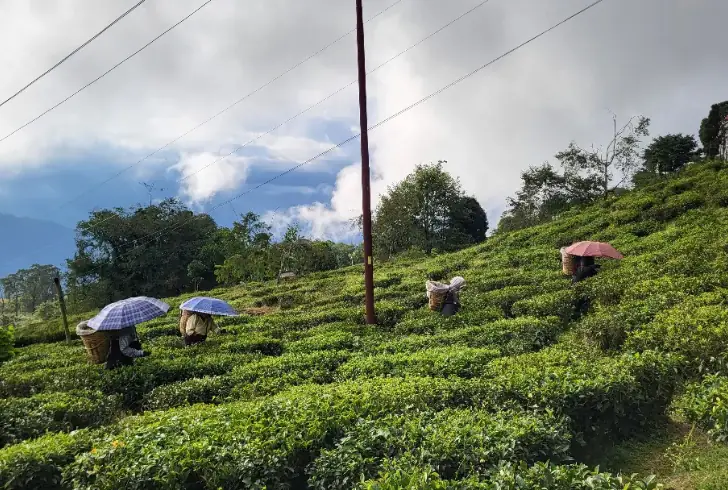
Today, only about 87 tea gardens operate in the region, producing limited quantities each year. Every leaf is hand-plucked, maintaining precision in selection and quality. Around 70% of these gardens have moved toward organic cultivation, avoiding chemical fertilizers and relying on natural soil care practices.
Makaibari also stands out for adopting biodynamic farming early on, relying on composting and natural cycles such as lunar phases and seasonal rhythms. This approach continues to influence modern tea-growing practices in the region.
The controlled production, combined with manual harvesting, ensures consistency in quality rather than scale, making Darjeeling tea one of the most closely watched tea categories in global trade.
Darjeeling tea maintains its identity through a rare mix of altitude, heritage, and strict production boundaries. From its early establishment in the 1800s to its protected status in the modern era, every stage of its journey reflects careful preservation.
The muscatel profile, limited output, and hand-plucked process keep it distinct in a world driven by mass production. Each cup represents a tightly defined origin that continues to shape its global reputation.