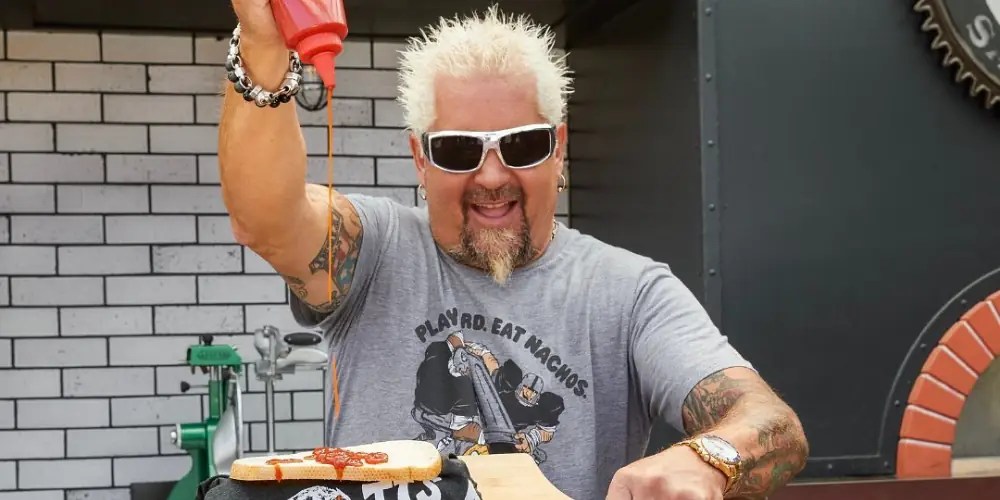
Food can cross boundaries that politics, sports, and music sometimes cannot. Guy Fieri has spent two decades proving that idea through “Diners, Drive-Ins and Dives,” a Food Network series that introduces viewers to independent restaurants, family recipes, and communities across the United States.
As the show approaches its 44th season, Fieri continues to see food as a way to understand people and their cultures.
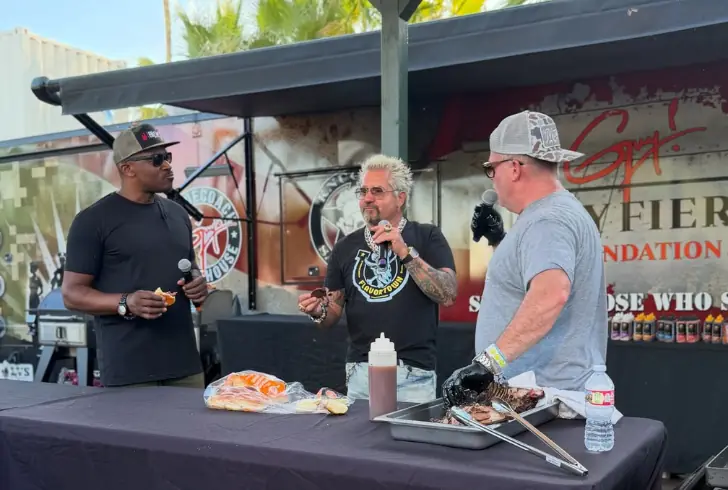
His work extends beyond television, too. Fieri has repeatedly used his platform to support restaurant owners and food-service workers, including a 2023 Maui fire relief fundraiser that raised $1.7 million for restaurants, service workers, and the local Salvation Army.
A Fundraiser With Taylor Sheridan
One story from the Maui fundraiser captures the kind of relationships Fieri has built over the years. He wanted meat for the event and contacted Taylor Sheridan, the creator and showrunner of “Yellowstone.” Sheridan agreed to provide the beef, but only under one condition.
“I called Taylor Sheridan to ask him just for some meat for the event. Taylor said, ‘I’ll only give you the meat if I can come cook it.’ And Taylor Sheridan shows up to cook.”
The moment reflects something Fieri often emphasizes: the people around him matter as much as the television personality audiences see on screen. He regularly credits friends, restaurant owners, chefs, and production crews for making his projects possible.
That attitude also shapes his response to his ninth executive producer Emmy nomination for “Diners, Drive-Ins and Dives.” Rather than treating the nomination as a personal achievement, Fieri points toward the people who have worked on the series for years.
“It’s recognition of all the hard work of so many people — from the ‘Diners, Drive-Ins and Dives’ locations themselves to my crew,” he says. “Honestly, it’s really about everybody else.”
A Crew Built Over 20 Years
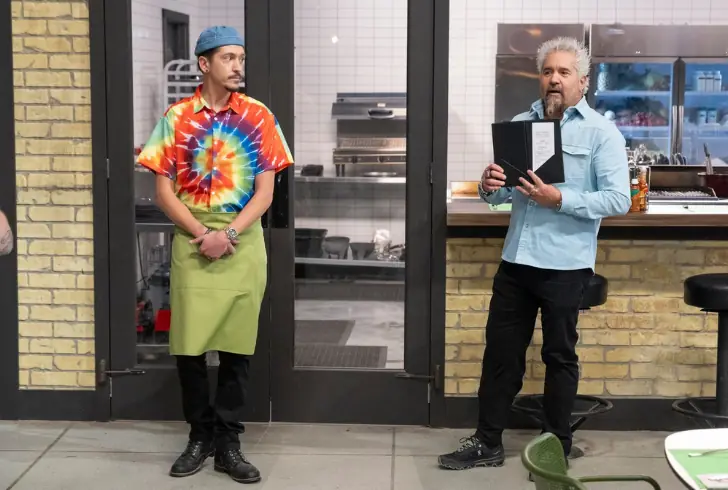
“Diners, Drive-Ins and Dives” has changed in small ways, but its production team has remained remarkably consistent. Fieri has worked with many members of his crew for more than a decade, and some have spent nearly the entire 20-year run with the show.
Anthony “Chico” Rodriguez has served as Fieri’s director of photography since the beginning of “Dives.” He continues to work across Fieri’s television projects.
Fieri says many crew members have also moved into new roles after developing their skills on the job. Some started as production assistants and later became camera operators.
“Most everybody has been here 10-plus years,” Fieri says. “The great thing is so many of the players have been cross-trained and have evolved into new positions.”
That long-term relationship has helped create a production environment where experience and opportunity grow together.
Keeping “Triple-D” Formula Fresh
The basic concept behind “Diners, Drive-Ins and Dives” remains straightforward. Fieri visits independently owned restaurants and highlights the dishes, owners, cooks, and local character that make each location different.
Early in the series, Fieri noticed that the show relied heavily on voiceover narration. He eventually realized that many of those explanations could be handled through conversations happening on location.
“When I first started ‘Triple-D,’ and I recognized how much voiceover we were doing in the show, I thought, ‘Wait a second. That’s all the stuff that we need to be talking about in current time.’”
Today, the voiceover is much more limited. The approach allows restaurant owners and chefs to explain their food and businesses in their own words.
Fieri does not see the need for major changes to the show’s basic structure. Instead, newer seasons introduce small variations without losing the original purpose.
“We’re not going to change the recipe because people have been coming there to get their chicken pot pie for so many years,” he says. “You don’t want to go and ‘chef it up’ too much.”
His son Hunter Fieri has appeared with him, while other chefs from shows such as “Tournament of Champions” and “Guy’s Grocery Games” have also joined certain segments. Celebrity chef restaurants have received attention as well.
Still, Fieri says the central idea remains “the fabric of the community.”
Food as a Cultural Connection
The show’s focus has become especially significant because many featured restaurants are operated by immigrants or first-generation families. Their menus often preserve traditional recipes and cooking methods while introducing those foods to customers outside their own communities.
That diversity challenges the common perception that “Diners, Drive-Ins and Dives” is simply a show about burgers, fried food, and oversized milkshakes.
Fieri has heard that description from viewers who assume the series focuses mainly on indulgent American comfort food.
“You know how many people walk up to me and go, ‘Oh, you’re the dude from the diner show. Yeah, the deep-fried pizza, burger, milkshake, monster-fried things.’ And I look at them, and I go, ‘You really must not watch the show that often,’” he says.
Instead, Fieri sees the program as a showcase for different ethnic traditions and regional identities.
“If anything, there’s really a tremendous highlight and recognition of ethnicity. That’s one of the things I love about it is we’re a melting pot. The United States is a melting pot. And what better way to show culture than through food?”
He also points to food as a shared interest among people with very different opinions and backgrounds.
“Not everybody likes the same sports. Not everybody likes the same politics. Not everybody likes the same music. But the common denominator of people really is food, if you think about it,” he says. “That’s one of the pieces that I love: When you talk about food, you talk about culture.”
Why Fieri Keeps Going
After 20 years, Fieri still sees “Diners, Drive-Ins and Dives” as closely connected to his purpose in the restaurant industry. He says restaurants remain central to his professional life, and the opportunity to highlight independent businesses keeps the work meaningful.
“Is 20 years a long time? It’s a really long time,” he says, laughing. “But the truth of it is, knowing what it does for my industry … restaurants are my life.”
He has also seen firsthand how appearing on the show can affect restaurant owners. Some businesses have remained part of his life for years after filming.
Fieri says he plans to continue as long as the network, viewers, and participating restaurants want the series to continue.
“Diners, Drive-Ins and Dives” Future
Fieri acknowledges the pressure that comes with maintaining a show that supports a large production team and attracts strong interest from restaurant owners. Businesses and fans actively campaign for their favorite restaurants to receive a spot on the program.
“Do I have some sleepless nights? Yeah. Do I put pressure on myself to keep this alive, keep my team employed?” he says.
He adds that the crew often jokes about how long he will continue hosting the show. His response is characteristically direct: “You know what? You may see me doing it in a walker.”
For Fieri, the reason to continue is bigger than personal recognition. He believes ending the show would mean ending an opportunity that can bring attention to restaurants and the people who run them.
An Emmy Would Be a Bonus
Although Fieri places the credit on his crew and featured restaurants, an Emmy win would still hold meaning. The current nomination marks his ninth executive producer nomination for “Diners, Drive-Ins and Dives.”
“I look at things optimistically,” he says. “I look at it and say, ‘Wow, it’s cool to be invited to the big dance.’”
After years as a consistent cable television presence, he hopes the series could finally receive the trophy.
“Hopefully one of these days, being that we’re the cable network consistently doing it for this many years, maybe this year is their year.”
Guy Fieri’s lasting connection to “Diners, Drive-Ins and Dives” comes from more than its familiar format. The series gives independent restaurants a national platform while introducing viewers to food traditions shaped by immigration, family history, and local communities.
After 20 years and 44 seasons approaching, its central message remains simple: food can tell people where others come from, what they value, and how communities preserve their identity. As Fieri puts it, “When you talk about food, you talk about culture.”