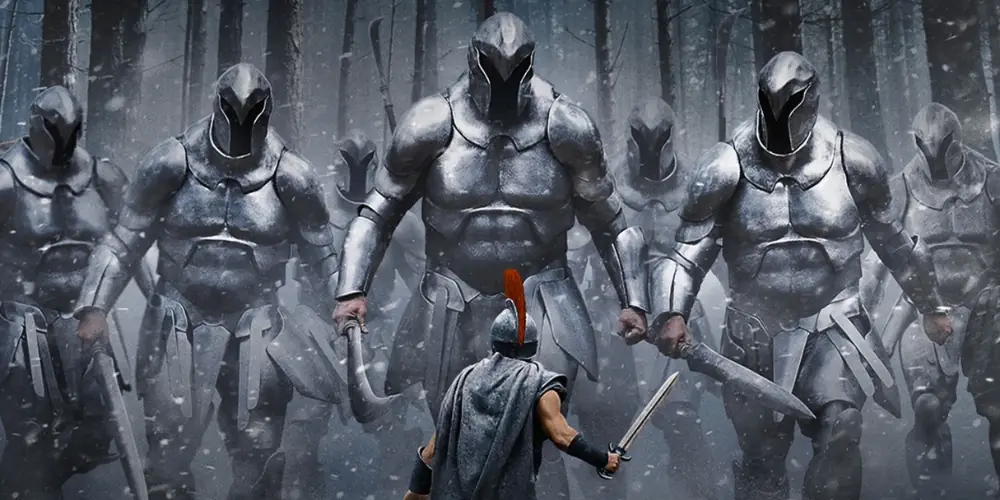
For thousands of years, Homer’s “The Odyssey” has stood as one of the greatest adventure stories ever told. The epic tale of Odysseus’ long journey home after the Trojan War has inspired writers, artists, and filmmakers across generations.
Christopher Nolan’s film adaptation brings the legendary story to a new audience, but it also raises a familiar question: how much of the ancient world shown on screen is historically accurate?
The answer is complicated. Like Homer’s original poem, Nolan’s “The Odyssey” does not serve as a strict historical record. It mixes mythology, archaeology, and creative choices to tell a powerful human story.
Some details reflect what historians know about the Bronze Age, while others borrow from later periods or modern filmmaking needs.
Homer’s Epic Was Never a History Book
Homer’s “The Odyssey” came from an oral storytelling tradition before it was written down. Generations of storytellers passed the tale from one era to another, adding details, adjusting characters, and reshaping events along the way.
The poem describes a world connected to the Mycenaean period, which existed during the Late Bronze Age around 1200 BCE. However, Homer likely composed the epic centuries later, during the Iron Age. Because of this time gap, the story naturally combines elements from different periods.
This historical mix appears in both ancient texts and modern adaptations. Homer included Bronze Age traditions alongside objects and customs familiar to his own audience. Nolan follows a similar path by creating a version of the ancient world that feels familiar and dramatic while taking creative liberties.
Armor That Mixes Different Eras
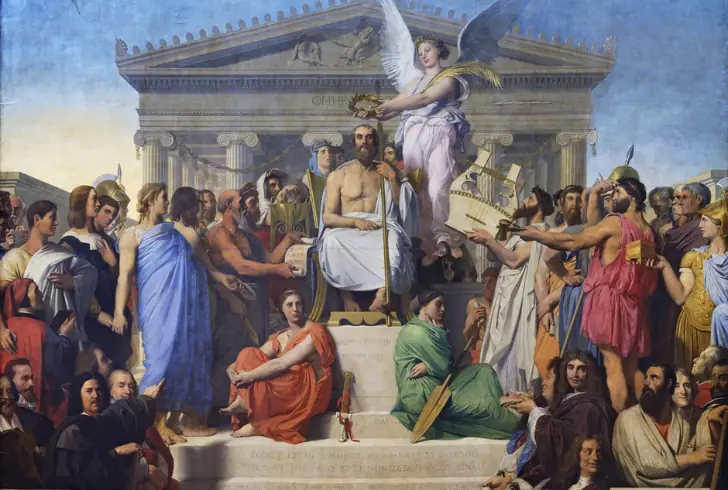
One of the most discussed details in the movie is Agamemnon’s helmet. Many viewers compared its dark, smooth design to Batman’s famous mask rather than a Bronze Age military helmet.
The armor shown in the film differs from what Mycenaean warriors likely wore around 1200 BCE. Soldiers from that period used heavy bronze protection, leather equipment, and distinctive helmets decorated with rows of boar tusks.
Archaeologists have discovered examples of boar-tusk helmets, and ancient descriptions in Homer’s “Iliad” also mention them. Creating one required dozens of boar tusks, making the helmets a rare and carefully crafted piece of military equipment.
The steel swords and lighter leather battle gear often seen in historical films belong more closely to later periods. However, this type of mixing is not new. Homer himself blended older traditions with the objects and warfare styles familiar during his lifetime.
Hospitality and the Idea of “Zeus’s Law”
The film introduces the idea of “Zeus’s Law,” a moral rule connected to kindness, respect, and treatment of guests. While this concept fits the themes of “The Odyssey,” it does not exactly match the ancient Greek tradition known as xenia.
Xenia was a real social custom based on hospitality between hosts and travelers. In a world without modern transportation systems or hotels, offering food, shelter, and protection to strangers was important for survival.
Ancient Greeks believed hospitality had a connection to the gods, especially Zeus, who was associated with protecting guests and travelers. However, Nolan’s version presents a broader moral message that resembles the idea of treating others fairly.
The film uses this concept to explain important moments involving Telemachus, the suitors in Ithaca, and Odysseus’s choices during his journey. It creates a clear emotional theme, even if the exact wording and meaning differ from ancient practices.
Modern Language With Ancient Emotions
Language has also sparked discussion around the film. When Telemachus says, “My dad is coming home,” some viewers questioned whether such a casual phrase fit ancient Greece.
The ancient Greeks obviously did not speak English, but they had informal family terms similar in feeling to modern expressions. Alongside the formal word patēr for father, Greek speakers used familiar terms such as pappa and táta.
The exact words may not belong to the Bronze Age world, but the emotion behind them does. Nolan’s choice focuses on making the relationship between characters understandable for modern audiences.
Ships Inspired by a Different Age
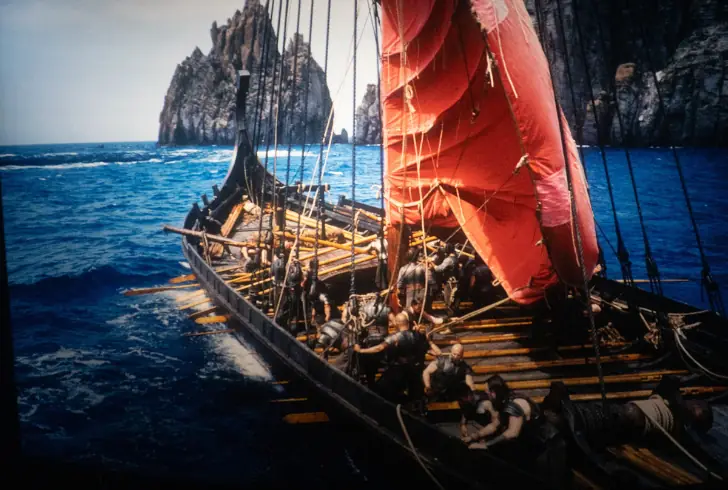
Odysseus’s ships appear impressive on screen, but their design does not fully match Bronze Age Greek vessels. The long wooden ships shown in the movie resemble Viking longships, which appeared thousands of years later.
During the Bronze Age, Greek sailors likely used penteconters. These ships measured around 90 feet long and carried 50 rowers arranged along both sides. They were designed for movement across the Mediterranean rather than the northern seas where Viking ships later became famous.
The choice of Viking-style ships came from practical filmmaking decisions. Nolan used a real working longship, the Draken Harald Hårfagre, instead of relying heavily on digital effects. The ship provided a realistic physical presence for filming, even though its design belonged to another historical period.
Connects Myth and History
“The Odyssey” has always existed between fact and fiction. It reflects pieces of ancient Greek society, including warfare, travel, family relationships, and religious beliefs, while also featuring monsters, gods, and impossible adventures.
Nolan’s adaptation follows the same pattern. Some details reflect archaeological knowledge, while others serve storytelling, visual impact, or practical filmmaking needs. Historical accuracy matters, but so does understanding the purpose of myths. These stories survived because people continued to retell them in ways that connected with each generation.
Christopher Nolan’s “The Odyssey” does not present the ancient world as a perfect historical reconstruction. Instead, it creates a modern interpretation of a story that has always changed over time.
The film’s armor, ships, language, and customs show how difficult it is to separate mythology from history after thousands of years. Like Homer’s original poem, the movie combines old traditions with new ideas, keeping the legendary journey alive for another generation.