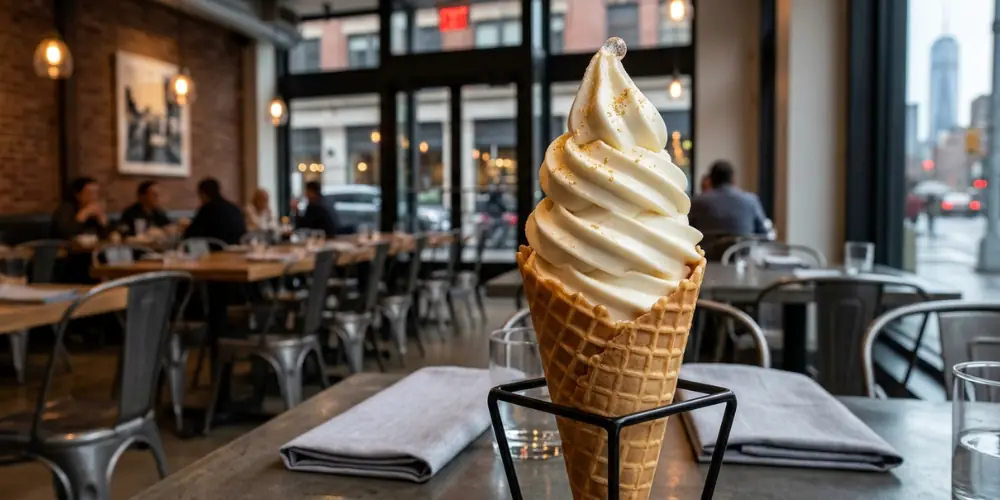
When summer heat arrives, soft-serve ice cream becomes an easy seasonal favorite. Once linked mainly with ice cream trucks, boardwalk stands, and roadside dairies, the dessert now appears on menus at casual restaurants and upscale dining rooms.
New York has seen a noticeable rise in creative soft-serve offerings, with chefs using familiar flavors, seasonal produce, sauces, and even cocktail-inspired combinations.
From Ice Cream Trucks to Restaurants
Soft-serve has long carried a strong sense of nostalgia. A simple chocolate-and-vanilla twist with sprinkles can recall childhood summers, yet restaurants are giving the familiar dessert a more contemporary role.
At Cote 550, restaurateur Simon Kim serves vanilla soft-serve with strawberry sauce after meals featuring wagyu beef, toro, and lychee martinis. The dessert arrives in a paper cup with a flat wooden spoon and a cookie.
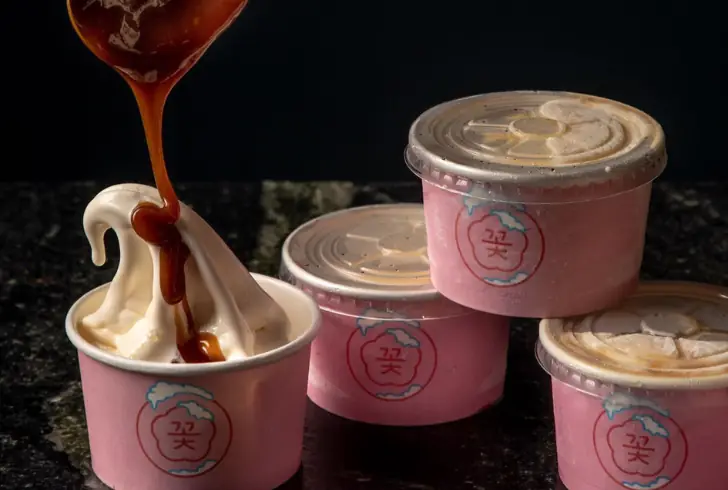
Kim has offered soft-serve at Cote Flatiron since 2017. He originally saw it as a memorable way to finish a meal without maintaining a full pastry program. As he explained, “Soft-serve is not something people traditionally would associate with fine dining.” Still, he believes its appeal comes from the fact that “everyone can enjoy” it.
Cote later developed a soy sauce caramel topping for its Flatiron location. Kim described the idea as a way to take familiar salted caramel and add soy sauce for an umami flavor connected to the restaurant’s Korean identity.
New York’s Soft-Serve Wave
The renewed interest in soft-serve comes alongside a major fro-yo trend in New York during summer 2026. Restaurants and dessert shops such as Mimi’s, Myka, and Birdie’s have attracted attention for their frozen yogurt offerings.
Soft-serve has also taken on more unexpected forms. A soft-serve margarita became a viral TikTok treat, while Unnecessary, a downtown ice cream shop from the Double Chicken Please team, introduced cocktail-inspired flavors. Its menu includes dirty martini soft-serve, reflecting the growing interest in desserts that borrow ideas from drinks and savory foods.
The trend is not entirely new. Milk Bar helped popularize creative soft-serve with its well-known Cereal Milk flavor. What feels different now is the number of restaurants incorporating soft-serve directly into their dining programs.
Why Restaurants Like Soft-Serve
The appeal goes beyond nostalgia. Soft-serve gives restaurants room to experiment while keeping preparation relatively simple. Compared with elaborate plated desserts, it can require less pastry work and can move quickly from kitchen to table.
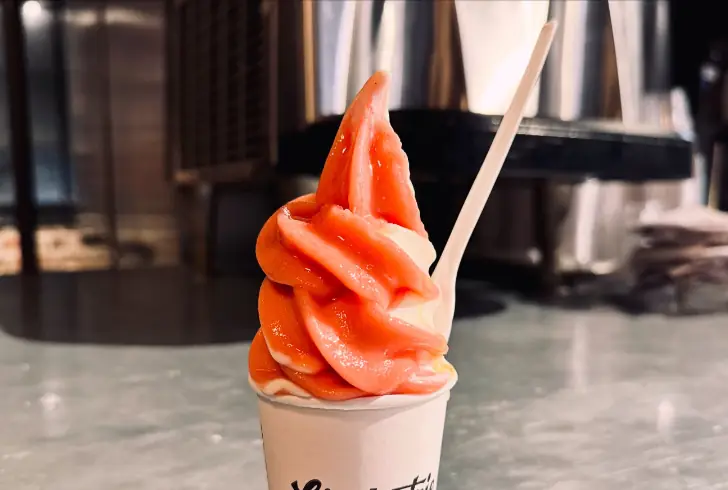
The format also allows chefs to test unusual combinations without making the dessert difficult to understand. Familiar ice cream provides a recognizable base, while toppings and sauces introduce new flavors.
New York restaurants currently serving soft-serve include Ambassadors Clubhouse, Cleo, Comal, Cote 550, Dante Aperitivo, Double Knot, Echo Lake, Howoo, La Tête D’Or, Leo, Lilia, L’Industrie, Milu, Momofuku Noodle Bar, Or’esh, Rule of Thirds, Sofreh, Shukette, and Wild Cherry.
La Tête D’Or Builds a Sundae
At Daniel Boulud’s French-inspired steakhouse La Tête D’Or, soft-serve becomes a customizable dessert. The restaurant serves a sundae with small ramekins containing house-made sprinkles, passionfruit marshmallows, raspberry meringue, cookie dough, and brownies.
Boulud said the restaurant takes pride in making its soft-serve “as natural as possible,” relying on real ingredients and authentic flavors. The setup allows diners to combine different toppings and create their own preferred mix of textures and tastes.
That flexibility helps explain why soft-serve works well in restaurant settings. A basic vanilla base can support several flavor directions without requiring a completely different dessert for every customer.
Leo Keeps the Nostalgia
Williamsburg restaurant Leo has served soft-serve since opening in 2019. Chef and co-owner Mike Fadem said the restaurant wanted an unfussy identity, and soft-serve fit naturally with that idea.
Fadem connected the dessert with memories of growing up in Middle America. At Leo, the soft-serve receives a simple finishing touch of olive oil and sea salt, while the flavor changes every few months.
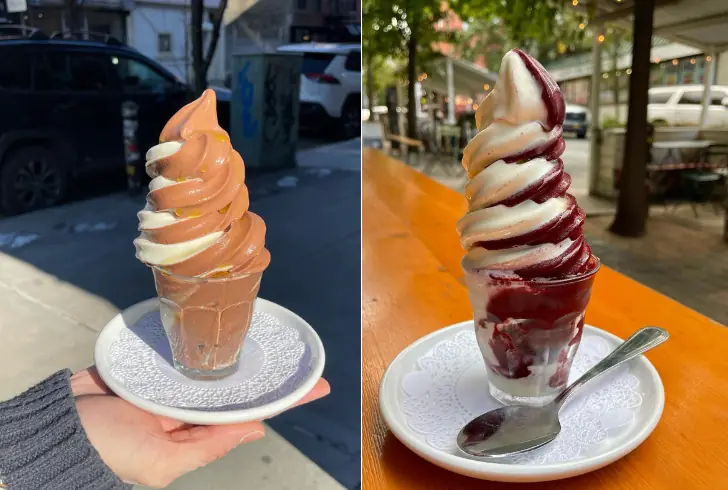
For summer 2026, Leo has offered corn and blueberry soft-serve. An upcoming combination pairs peanut ice cream with grape sorbet. According to Fadem, customers regularly reach out through direct messages and visits, asking for popular flavors to return.
Leo also waits for seasonal produce before developing certain flavors. The goal is to reproduce the fruit’s natural character rather than simply use it as a flavor label. Fadem noted that soft-serve is “not like a big moneymaker” for the restaurant, but it remains a fun part of the menu.
Seasonal Flavor Is Driving Interest
Seasonality has become an important part of restaurant soft-serve. Fresh produce gives chefs a reason to rotate flavors throughout the year, while customers have a reason to return for combinations that may only appear for a limited period.
Corn and blueberry at Leo show how a familiar frozen dessert can take on a distinctly seasonal character. Cote’s soy sauce caramel demonstrates another approach, using a savory ingredient to reshape a classic topping.
These examples also show that soft-serve does not need complicated presentation to attract attention. A paper cup, simple spoon, sauce, or small topping can be enough when the flavor idea is distinctive.
Soft-serve is becoming a more creative part of restaurant dessert menus, especially in New York. Chefs are using seasonal ingredients, savory sauces, and unexpected flavor combinations to give the classic treat a fresh identity. Options such as soy sauce caramel and corn with blueberry show how much variety can fit into a simple frozen dessert.
Its appeal also comes from its ease and familiarity. Soft-serve can be served quickly, customized with toppings, and adapted to changing seasonal flavors. That balance allows restaurants to offer something playful without making the dessert overly complicated.