
There are many people who feel sleepy while driving a car and most of the time we link this laziness to a lack of caffeine or an early start. But that’s not the reason always. According to a new study, there is something in the actual parts of the car that can make a driver sleepy.
The study showed that the vibration produced by the car when it makes a move makes you sleepier in just 15 minutes. The research was carried out by RMIT University in Australia and it stated that both road safety experts and car manufacturers should think over it.
However, they want to dig deeper into the vibration produced by the car seats. According to Stephen Robinson, one of the team members who took part in the study, said that when a driver is tired, it takes a little to lull his/her brain and the vibration produced by the car seats can easily do this.
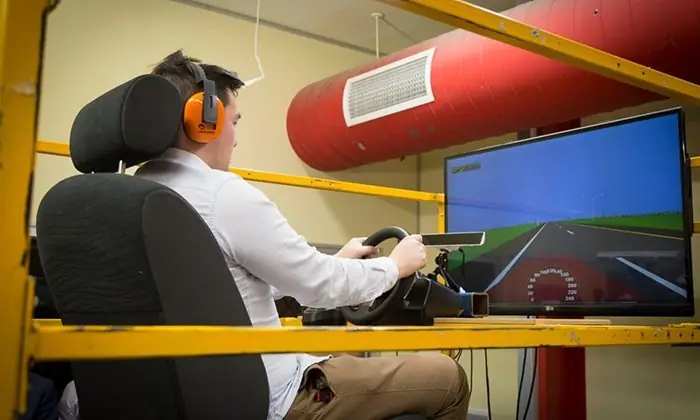
The vibrations produced by the car and truck seats are low-frequency vibrations and can make healthy and active people lazy and sleepy, the report stated.
Robinson and his research team used 15 drivers and took them to the virtual simulator and then tested at different frequencies. All the volunteers were tested twice, once with vibrations at low frequencies of 4-7 Hz vibrations and once without vibrations.
After that, all the volunteers were tested for heart rate variability (HRV) over the session of 60 minutes. HRV gives us a clear indication of body drowsiness as it shows the dropping point of the nervous system.
The stats showed by the monitors were astonishing as it stated that drowsiness kicking off just after 15 minutes. The average time of the drowsiness of the drivers was 30 minutes and as the time goes on, drivers felt sleepier, the report showed.
When asked about the cause of sleepiness, the researchers said that the brain becomes synchronized with the vibrations and enters a premature stage of sleep. But there are some limitations to this research which should be discussed here.
Only 15 drivers were tested and they were tested at a very narrow range of frequencies. The volunteers were also sent down on a repetitive and two-lane highway and there was no risk of rash driving.
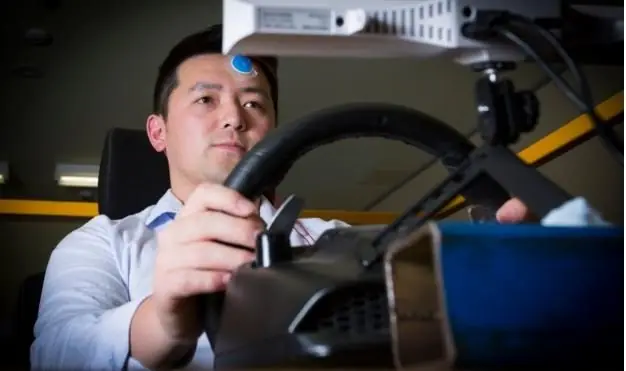
According to a study, every 1 in 5 accident caused due to tiredness and with the help of this research, the scientists were able to find out what’s going on. The data of just 15 volunteers was not enough and the researchers want to see the bigger picture and want to include more drivers tested on a wider range of frequencies in the study.
The research further found out the change in seat design may reduce the vibration effect, but only a little. The research team also predicted a totally opposite effect on the arrival of the self-driving car and the all the people will then fall asleep.
However, Robinson further said there are some frequency ranges when a totally opposite effect was noted and at those frequencies, vibrations keep the drivers alert. Therefore to induct those frequencies into the car seats and to inform the car manufacturers about those ranges, we need to carry out this study with a larger group of drivers, said Robinson.
Despite the research, the effects of car vibrations on sleep were not understood completely, said Professor Stephen Robinson. In future, the car manufacturers should avoid those frequencies to the car seats to improve road safety.
The study was led by Professor Stephen Robinson and Associate Professor Mohammad Fard. While talking about the research results, Fard said that to get better results, we need to conduct this study at a bigger level and they also want to find out the effects of the age factor while driving.
The driving simulator used in this research was designed and developed in RMT University and only one of its kind that can precisely replicate the car vibrations. The driving simulator uses a servo-controlled hydraulic system which enables a driver to experience real-life driving conditions.