Food labels often leave shoppers guessing. Many people assume a product has become unsafe to eat simply because a printed date has passed. In reality, most date labels refer to food quality rather than safety.
This misunderstanding leads to millions of pounds of perfectly edible food ending up in the trash every year.
To address this issue, California has introduced a new law that standardizes food date labels, making it easier for consumers to understand what the dates actually mean while helping reduce unnecessary food waste.
California Introduces Two Standard Food Date Labels
Beginning July 1, California’s Assembly Bill 660 (AB 660) changes how food manufacturers label packaged food products. The law limits food date labels to only two approved phrases, replacing the wide variety of terms that have confused shoppers for decades.
The approved labels are:
1. “BEST if Used by” or “BEST if Used or Frozen by” — These labels indicate when a product is expected to deliver its best flavor, freshness, or overall quality.
2. “USE by” or “USE by or Freeze by“— These labels identify the point after which a food product may no longer be safe to consume.
The law applies to food products manufactured on or after July 1, 2026. Products already produced before that date may continue to display older labels until existing inventory is sold.
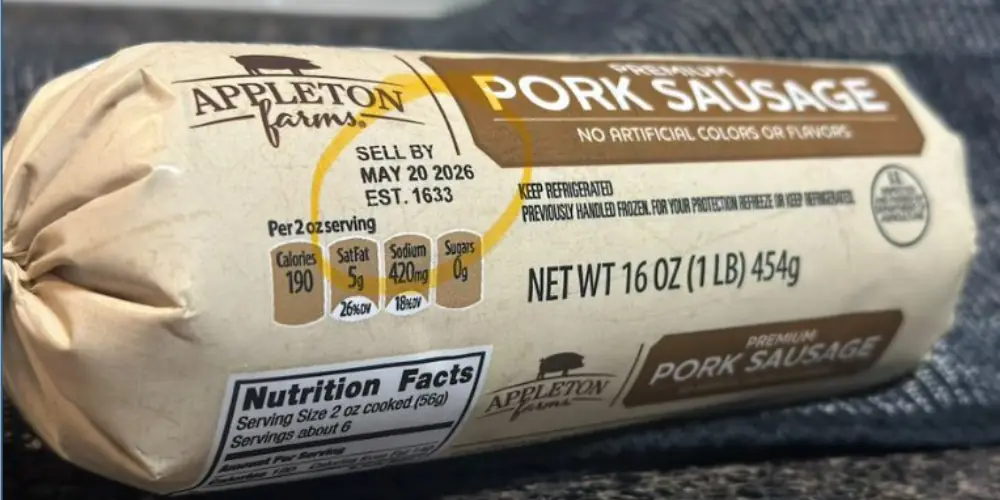
Another important change removes traditional “sell by” dates from consumer-facing food packaging. However, manufacturers may still use coded stock rotation dates that retailers can read for inventory management.
Why Food Date Labels Have Been So Confusing
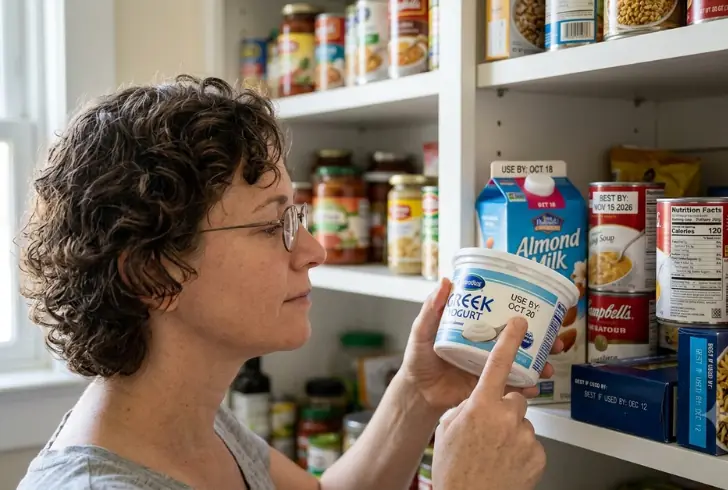
Food packaging across the United States currently includes more than 50 different date labels, according to researchers from the University of Maryland. Consumers regularly encounter phrases such as:
– Use by
– Best by
– Expires by
– Please enjoy by
Each phrase may carry a different meaning depending on the manufacturer, making it difficult for shoppers to know whether the date refers to food quality, freshness, store inventory, or food safety.
Andrea Collins, Senior Specialist in Food Waste at the Natural Resources Defense Council (NRDC), explained that some labels were originally created to help retailers manage inventory. Most packaged food companies use date labels to indicate when products maintain peak quality, while only a limited number of labels are intended to warn consumers about increased food safety risks.
Because these distinctions are rarely explained on packaging, many shoppers mistakenly throw away food that remains perfectly safe to eat.
Confusion Continues to Drive Food Waste
Recent research highlights how widespread this misunderstanding has become.
A 2025 national survey conducted by Harvard Law School, Johns Hopkins, and ReFED surveyed more than 2,000 people about food date labels. While 87% of respondents believed they understood the meanings of eight different label types, testing showed that only an average of 53% correctly identified their actual meanings.
The study also found that 43% of respondents said they always or usually discard food when it reaches or passes the printed date. In comparison, that figure stood at 37% in 2016, showing that confusion has continued to grow.
California experiences the impact on a massive scale. According to the California Department of Resources Recycling and Recovery (CalRecycle), residents throw away enough unspoiled food each year to equal approximately 2.5 billion meals.
Organic waste now represents 48% of everything Californians send to landfills. As that waste decomposes, it produces methane, one of the most powerful greenhouse gases.
CalRecycle explains:
“As organic waste decomposes in landfills, it accounts for 41% of the state’s methane emissions, a greenhouse gas with 84 times the power to heat the climate as carbon dioxide.”
Discarding food too early also places an unnecessary financial burden on households by increasing grocery expenses.
Why the US Ended Up With So Many Labels
Many consumers believe the federal government regulates food date labels. According to Andrea Collins, that assumption is incorrect.
With the exception of infant formula, the federal government does not establish standardized food date labeling requirements. Instead, individual states developed their own rules over several decades.
Emily Broad Leib, Clinical Professor of Law and Director of the Harvard Law School Center for Health Law and Policy Innovation, noted that the United States remains one of the few countries without a nationwide framework for food date labels.
She explained:
“The United States is one of the only countries that doesn’t have a federal road map for state labels on food, so that doesn’t mean every country does it well, but they all have something.”
Beginning in the late 1950s and expanding during the 1970s, several states introduced laws requiring date labels for certain food products. Those early regulations focused mainly on freshness and shelf life rather than food safety. Over time, consumers started treating nearly every printed date as an expiration date.
Broad Leib described the problem by saying:
“Over time, a large majority of consumers interpreted those as safety dates, and so we have this real mismatch.”
AB 660 aims to correct that misunderstanding by separating quality information from genuine food safety guidance.
How the New Law Will Be Enforced
Assembly Bill 660 amends the California Retail Food Code, and local health agencies will oversee enforcement.
According to the California Department of Public Health, local health departments already conduct routine inspections to verify compliance with health and sanitation requirements. Food date labeling will now become part of those inspections.
In Los Angeles County, the Department of Public Health will monitor businesses for compliance. If inspectors identify violations during scheduled inspections or complaint investigations, they will document them in the facility’s Official Inspection Report and take appropriate enforcement action.
Although the enforcement process is clear, Emily Broad Leib believes additional guidance may still be helpful.
She said:
“We should have only two labels, and it should be clear which one is for safety and which one is for quality, so that consumers can make better economic and safety decisions.”
She also pointed out that it remains uncertain what level of training inspectors will receive to determine whether manufacturers are selecting the correct label for each specific product.
Broad Leib added:
“It could be something to watch out for or future, maybe, state-level guidance on how they should do these inspections. Or even guidance to businesses around making the decision of which label to use.”
What This Change Means for Consumers
California’s updated labeling law removes much of the uncertainty that has surrounded food date labels for decades.
By limiting packaging to two clearly defined phrases, the state hopes to help consumers distinguish between food quality and food safety more easily. The change also supports efforts to reduce unnecessary food waste, lower household food costs, and decrease landfill methane emissions.
While older labels may still appear on products manufactured before July 1, 2026, the new system is expected to create greater consistency and make everyday grocery decisions much easier for California shoppers.